I. The rhythm
Every age is named for its tools. The Bronze Age. The Iron Age. The Industrial Age. The Information Age.
The printing press did not just spread books; it broke the Church, lit the scientific revolution, and changed what a human being could know. Steam did not just move trains; it built the modern city. The transistor did not just switch current; it became computing, the internet, and the device in your hand. A steel box with a standard set of corners did more for global trade than any treaty ever signed.
Civilization moves at the rhythm of technology. Tools set the tempo. Change the tools and you change the world.
Every age is named for its tools. The Bronze Age. The Iron Age. The Industrial Age. The Information Age.
The printing press did not just spread books; it broke the Church, lit the scientific revolution, and changed what a human being could know. Steam did not just move trains; it built the modern city. The transistor did not just switch current; it became computing, the internet, and the device in your hand. A steel box with a standard set of corners did more for global trade than any treaty ever signed.
Civilization moves at the rhythm of technology. Tools set the tempo. Change the tools and you change the world.
II. The thing underneath
Nothing carries itself into the world. Someone has to organize people, capital, and risk to turn an idea into something real. Science is rarely the bottleneck on progress, the organization is.
The transistor was not an accident. It came out of Bell Labs, a place Mervin Kelly designed intentionally to put physicists and engineers in the same hallway until they collided. The structure produced the breakthrough.
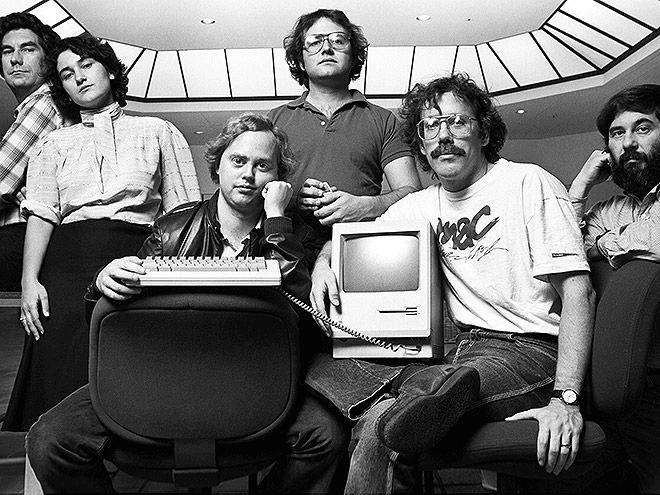
Xerox PARC invented the graphical interface, the mouse, Ethernet, the laser printer – nearly everything you are using to read this. But Xerox shipped almost none of it. Apple - a different organization - did.
Taiwan did not out-invent anyone on the way to owning the world's chips. Morris Chang made one organizational decision, a foundry that builds other companies' designs and competes with none of them, and that single choice created the entire industry that followed.
The future is not gated by what can be invented. It is gated by whether an organization exists that can carry the invention.
Nothing carries itself into the world. Someone has to organize people, capital, and risk to turn an idea into something real. Science is rarely the bottleneck on progress, the organization is.
The transistor was not an accident. It came out of Bell Labs, a place Mervin Kelly designed intentionally to put physicists and engineers in the same hallway until they collided. The structure produced the breakthrough.
Xerox PARC invented the graphical interface, the mouse, Ethernet, the laser printer – nearly everything you are using to read this. But Xerox shipped almost none of it. Apple - a different organization - did.
Taiwan did not out-invent anyone on the way to owning the world's chips. Morris Chang made one organizational decision, a foundry that builds other companies' designs and competes with none of them, and that single choice created the entire industry that followed.
The future is not gated by what can be invented. It is gated by whether an organization exists that can carry the invention.
III. The unit
The organization is the smallest unit that builds the future.
The most consequential thing we can do is obsess about them. Not at the lone genius, helpless without the people who believe him. Not at the market, which only sorts and prices what organizations have already built. Not at the technology, inert until an organization picks it up and aims it.
Organizations are where instinct becomes product, where one person's view of the world becomes thousands of people's operating rhythm. If you want to understand where civilization is going, study the organizations dragging it there.
The organization is the smallest unit that builds the future.
The most consequential thing we can do is obsess about them. Not at the lone genius, helpless without the people who believe him. Not at the market, which only sorts and prices what organizations have already built. Not at the technology, inert until an organization picks it up and aims it.
Organizations are where instinct becomes product, where one person's view of the world becomes thousands of people's operating rhythm. If you want to understand where civilization is going, study the organizations dragging it there.
IV. Singular
How organizational value gets created is one of the most misunderstood dynamics in business. We are told companies are machines: assemble the right parts in the right order and the output repeats. Run the playbook.
But every organization that matters is singular, the extension of a source: a founder whose instincts, taste, and judgment became the operating system everyone else runs on.
Lockheed's Skunk Works was Kelly Johnson. A small, secret team that built the U-2 and the SR-71 on timelines nobody else could touch, because Johnson ran it by his own fourteen rules and answered to almost no one. Berkshire is Buffett and Munger; people have copied the letter and the structure for forty years and the returns not once, because the source does not transfer. Amazon is Bezos's instincts turned into mechanism: the six-page memo, working backwards, Day One. Toyota's production system was copied by every manufacturer on earth for half a century, and almost none reproduced it, because it was never a checklist. It was a culture, and a culture has an author.
Building an organization is the highest art form available to a founder. It is the medium they work in. Most founders are remembered for a product. The ones who matter built the thing that makes the products, and it outlived them.
How organizational value gets created is one of the most misunderstood dynamics in business. We are told companies are machines: assemble the right parts in the right order and the output repeats. Run the playbook.
But every organization that matters is singular, the extension of a source: a founder whose instincts, taste, and judgment became the operating system everyone else runs on.
Lockheed's Skunk Works was Kelly Johnson. A small, secret team that built the U-2 and the SR-71 on timelines nobody else could touch, because Johnson ran it by his own fourteen rules and answered to almost no one. Berkshire is Buffett and Munger; people have copied the letter and the structure for forty years and the returns not once, because the source does not transfer. Amazon is Bezos's instincts turned into mechanism: the six-page memo, working backwards, Day One. Toyota's production system was copied by every manufacturer on earth for half a century, and almost none reproduced it, because it was never a checklist. It was a culture, and a culture has an author.
Building an organization is the highest art form available to a founder. It is the medium they work in. Most founders are remembered for a product. The ones who matter built the thing that makes the products, and it outlived them.
V. The paradox
If every organization is singular, what is there to learn? Everything.
You cannot copy an organization. You can only decode the thinking that built it. Copy the artifact and you get a cargo cult. Understand the judgment and you sharpen your own.
Long Lines is a publication for the people who build organizations, and the ones who can't stop studying how it's done.
If every organization is singular, what is there to learn? Everything.
You cannot copy an organization. You can only decode the thinking that built it. Copy the artifact and you get a cargo cult. Understand the judgment and you sharpen your own.
Long Lines is a publication for the people who build organizations, and the ones who can't stop studying how it's done.
Civilization moves at the rhythm of technology. Technology moves at the rhythm of organizations. And organizations move at the rhythm of the rare people who can build them. Those are the people we're writing about.
Civilization moves at the rhythm of technology. Technology moves at the rhythm of organizations. And organizations move at the rhythm of the rare people who can build them. Those are the people we're writing about.
Civilization moves at the rhythm of technology. Technology moves at the rhythm of organizations. And organizations move at the rhythm of the rare people who can build them. Those are the people we're writing about.
Long Lines is a publication by Carrara © 2026
Long Lines is a publication by Carrara © 2026